
🇬🇷 This post is part of my complete Greece Travel Guide — ferries, islands and itineraries in one place.
This post contains affiliate links. If you book through them, I may earn a small commission at no extra cost to you — it helps keep LifeTsak running, and I only recommend tools I actually use.
Wondering how to book ferries in Greece without losing your mind? If there’s one thing that can turn a dreamy Greek island trip into a stressful mess, it’s the ferries. I learned this the hard way — my first trip through the Cyclades meant three operator websites open at once, half of them only in Greek, prices that didn’t match, and a sinking feeling I’d booked the wrong boat on the wrong day. Beautiful islands, terrible booking experience.
These days I book ferries in Greece with Ferryhopper and I honestly can’t imagine going back. In this guide I’ll walk you through exactly how ferries work in Greece, how to plan an island-hopping route that actually makes sense, and why Ferryhopper has become my go-to for stress-free bookings.
Key takeaways 📌
- Ferries are essential for getting around Greece’s 200+ inhabited islands.
- Dozens of operators run their own sites — Ferryhopper compares 220+ of them in one place.
- Book your whole island-hopping route in a single multi-route reservation.
- Fares match booking direct, with e-tickets and online changes.
- Book popular summer routes (Santorini, Mykonos) weeks ahead.
What’s in this guide 🧭
- Why ferries are the heart of travel in Greece
- What is Ferryhopper?
- How Ferryhopper works
- The features that make a difference
- Ferryhopper fees & payment
- How to plan an island-hopping route
- Which Greek islands to add
- A sample 10-day Cyclades route
- My honest tips for smooth ferry days
- Is Ferryhopper worth it?
- FAQ
Why ferries are the heart of travel in Greece 🌊
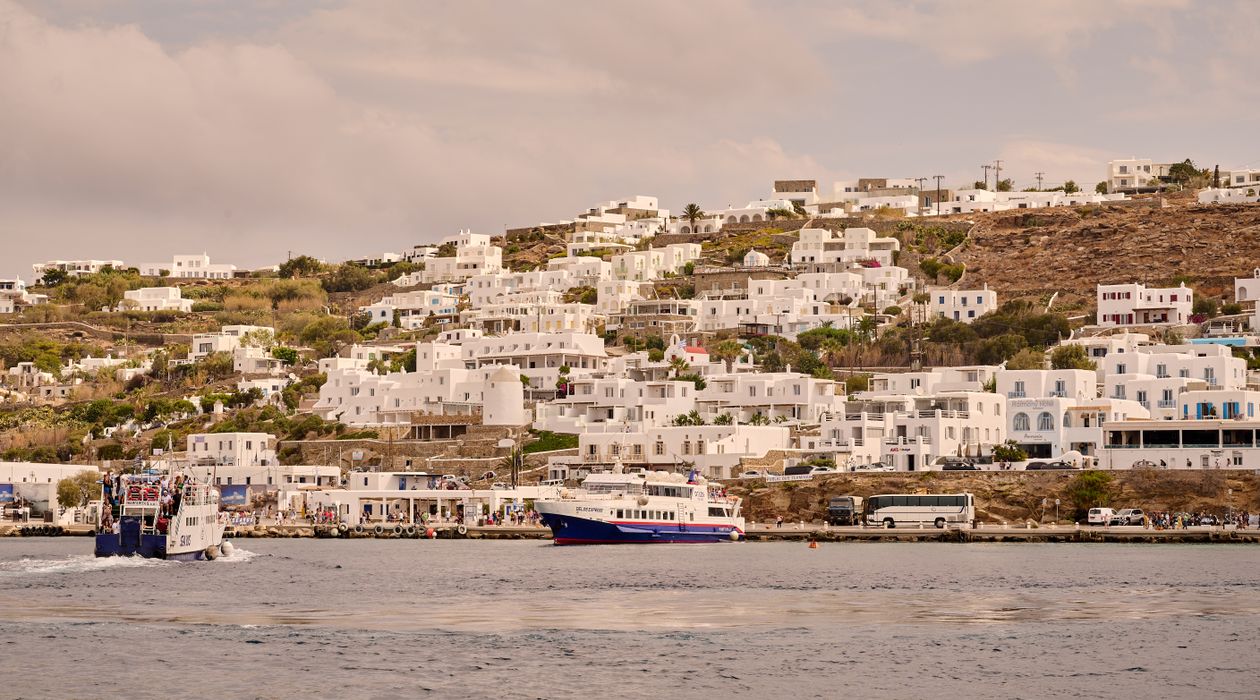
Greece has more than 200 inhabited islands scattered across the Aegean and Ionian seas. Unless you’re flying between the big ones, ferries are how you get around — and honestly, they’re part of the magic. There’s nothing like standing on the deck as your island appears on the horizon, white houses stacked against a blue-and-white sky.
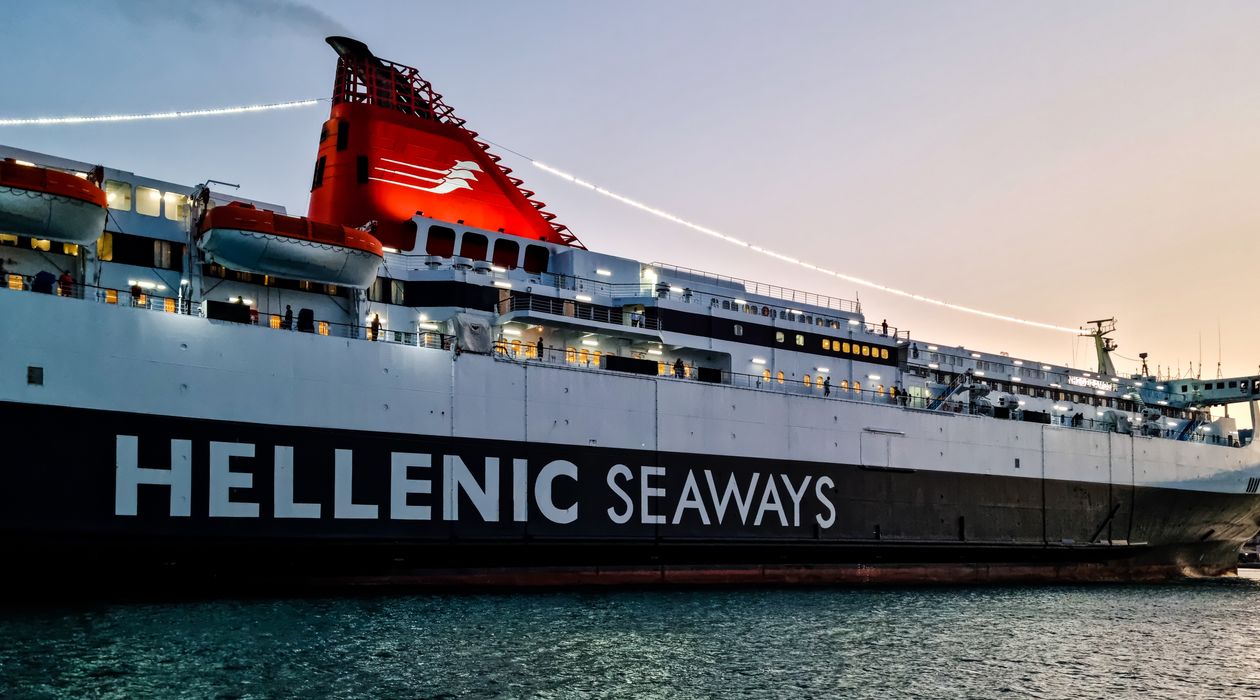
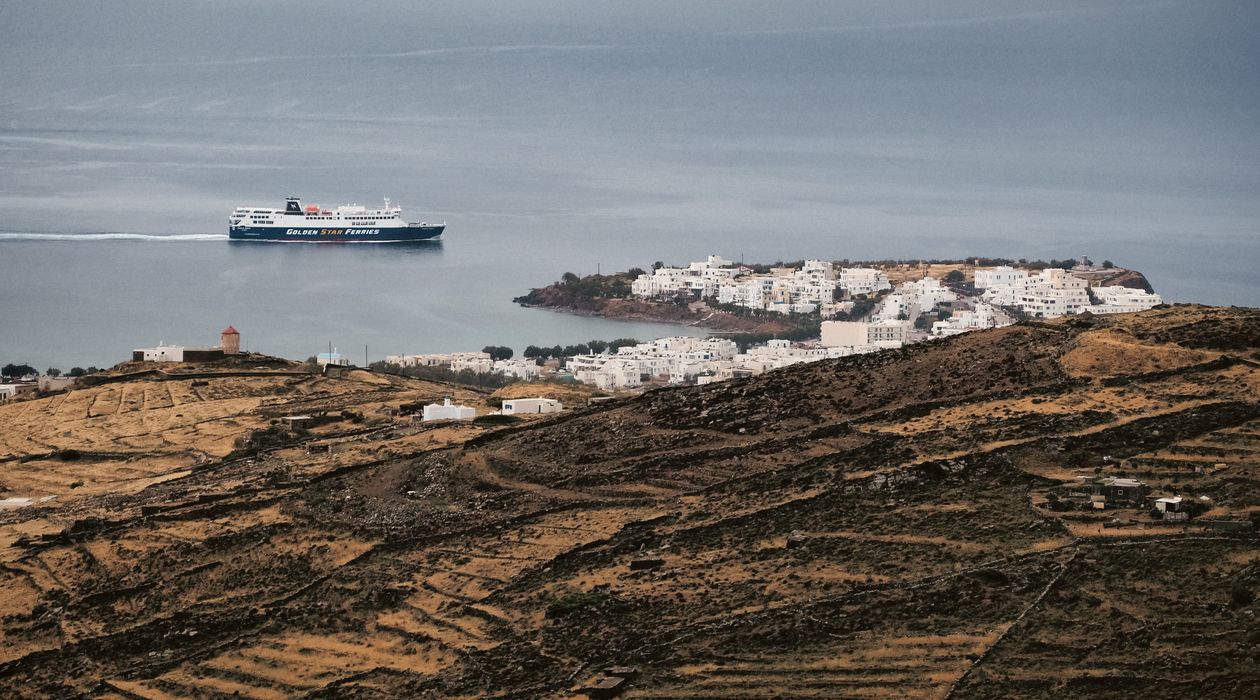
But here’s the reality most travel blogs skip: the Greek ferry system is fragmented. Dozens of operators — Blue Star Ferries, Seajets, Golden Star Ferries, Hellenic Seaways, Minoan Lines, Aegean Speed Lines and more — each run their own routes, schedules and (frustrating) websites. Some routes only run a few times a week. High-speed catamarans and slower conventional ferries serve the same islands at wildly different prices and travel times. Piecing all that together yourself is exactly the headache I described above. That’s the problem Ferryhopper solves.
What is Ferryhopper? 🤔

Ferryhopper is an online ferry booking platform — think of it as the Skyscanner of ferries. Founded in 2017 by a group of friends who knew firsthand how painful booking island-hopping ferries could be, it now pulls together real-time schedules for more than 3,000 ferry routes and compares prices from over 220 ferry companies worldwide. In Greece it covers all the major operators you’ll actually need, so you’re not bouncing between five different sites to plan one trip.
👉 Check Greek ferry routes and prices on Ferryhopper here
How Ferryhopper works (step by step) 🧭
- Search. Enter your departure port, destination and travel dates — e.g. Piraeus (Athens) → Santorini.
- Compare. See every crossing from different companies side by side, with prices, times and durations, plus which are fast or conventional ferries.
- Select. Pick the crossing that fits your plans and budget.
- Add details. Passengers, vehicles, cabins for overnight routes, even pets. 🐾
- Pay. Securely by card, PayPal or Klarna, and get instant confirmation by email.
The features that actually make a difference ✨
Multi-destination booking (the island-hopper’s dream)
This is the big one. Ferryhopper lets you combine multiple ferry routes in a single booking. So Athens → Mykonos → Naxos → Santorini → back to Athens can be planned and paid for at once, arriving in one confirmation email. No more juggling four reservations across four operators.
Transparent pricing, no hidden fees
You see honest, comparable fares across companies and dates, so you can decide whether saving two hours on a high-speed ferry is worth double the price. (Sometimes it absolutely is. Sometimes it’s not.)
Manage, modify or cancel online
Plans change. Through the “My Booking” section you can modify or cancel your reservation yourself, online, without waiting on hold with an operator’s call centre.
Digital e-tickets
Most operators support e-tickets, which land in your inbox after booking. Just show the ticket or confirmation on your phone when you board — no printer required. 📱 There’s also a well-reviewed app for iPhone and Android so you can book on the move.
👉 Plan your whole island-hopping route on Ferryhopper
Ferryhopper fees & payment: what to expect 💳
A question I get a lot: does Ferryhopper cost extra? In my experience the fares match what you’d pay booking directly with the operator, and there are no surprise surcharges bolted on at checkout — the price you compare is the price you pay. You can pay by credit or debit card, PayPal or Klarna, and your tickets arrive by email straight away.
A few operators charge their own small change or cancellation fees, but Ferryhopper shows those terms up front before you commit, and you can handle modifications yourself in the “My Booking” area. For longer or overnight crossings it’s worth booking a numbered seat or cabin rather than deck class — the comfort difference is huge, and you can see exactly what each fare includes before paying.
How to plan a Greek island-hopping route 🗺️
- Start from Athens (Piraeus or Rafina). Piraeus is the huge port near Athens; Rafina is closer to the airport and handy for the Cyclades.
- Group islands by cluster. Cyclades, Dodecanese, Ionian, Sporades, Crete. Hopping within a cluster is easy; between clusters can be slow.
- Don’t over-pack your itinerary. Ferries eat time — give each island at least two nights.
- Check frequency, not just existence. Some routes run daily, others twice a week.
- Book popular summer routes early. July–August ferries to Santorini and Mykonos sell out and climb in price.
Which Greek islands should you add to your route? 🏝️
With 200+ islands it’s hard to choose, so here’s a quick starter based on the most-loved (and most ferry-connected) spots:
- Santorini — the iconic caldera sunsets, and the classic finale of any Cyclades trip.
- Mykonos — beaches, nightlife and windmills; extremely well connected by fast ferry.
- Naxos & Paros — my favourites: great food, sandy beaches and central hubs for onward hops.
- Milos — dramatic moon-like coves and quieter than its neighbours.
- Crete — big enough for a trip of its own, with overnight ferries from Piraeus.
- Rhodes & the Dodecanese — medieval old towns and Turkey-coast day trips.
- Corfu & the Ionian — lush and green, on the west side of the country.
For official visitor information on each island, the Greek National Tourism Organisation’s Visit Greece site is a reliable reference, and you can plan every crossing between them on Ferryhopper.
A sample 10-day Cyclades route 🏖️
- Days 1–2: Athens — Acropolis, Plaka, eat everything.
- Day 3: Ferry Piraeus → Paros. Relaxed, gorgeous, great base.
- Day 5: Short hop Paros → Naxos — the most underrated island in the Cyclades.
- Day 7: Ferry Naxos → Santorini. Watch the caldera appear as you arrive. 🌅
- Day 10: Ferry or flight back to Athens.
Every one of those crossings can be booked in a single multi-route reservation on Ferryhopper — exactly the kind of trip it was built for.
👉 Build this exact route on Ferryhopper
My honest tips for smooth ferry days ⚓
- Arrive early. Aim for 30–45 minutes before departure, more with a vehicle.
- Screenshot your ticket. Port signal can be patchy — keep your e-ticket offline.
- Big ferries = smoother rides. If you get seasick, larger conventional ferries beat fast catamarans, especially in the summer meltemi winds.
- Bring snacks and water. A spanakopita from a bakery beats the onboard café. 🥧
- Sit outside if you can. The deck views are the whole point.
So, is Ferryhopper worth it? ✅
For me, a resounding yes. It doesn’t cost more than booking direct, it saves hours of research, and it turns the single most stressful part of Greek travel into something genuinely easy: compare everything in one place, book multi-island trips in one payment, manage changes yourself, and keep all your tickets on your phone. If you’re planning a trip to Greece, skip the five-tabs-open chaos I went through.
👉 Search Greek ferries and book your trip on Ferryhopper here
Frequently asked questions about booking ferries in Greece ❓
How do I book ferries in Greece?
The easiest way to book ferries in Greece is with Ferryhopper: search your route, compare every operator side by side, pay securely, and get an e-ticket by email.
Is Ferryhopper legit and safe to use?
Yes. Ferryhopper has operated since 2017, works with 220+ ferry companies, uses secure payment (card, PayPal, Klarna), issues e-tickets and lets you manage or cancel bookings online.
When should I book Greek island ferries?
Book popular summer routes (Santorini, Mykonos, Paros) several weeks ahead — July and August sell out and prices rise. In shoulder season you have far more flexibility.
What is the best way to island hop in Greece?
Group islands by cluster (e.g. the Cyclades), start from Athens’ ports of Piraeus or Rafina, and book your whole chain of crossings in a single multi-route Ferryhopper reservation.
How early should I arrive at the ferry port?
Aim to arrive 30–45 minutes before departure — earlier if you’re travelling with a car or scooter, as vehicle boarding takes longer.
Kalá taxídia — safe travels! If you use this guide to plan your trip, I’d love to hear which islands you picked. Drop me a message on the contact page. 💙
Planning more of your travels? Check out my other guides, like things to do in Rome and North Italy, or browse all my travel guides.
⛴️ Ready to book your ferries?
Compare every route and operator across Greece — the exact tool I use for all my island hopping.
Plan Your Ferry Trip
Book ferry tickets fast and compare routes across Greece with Ferryhopper.
Keep exploring 🌍

Written by Alexandros
Traveler & storyteller — 16 countries, 6 languages, 10+ Erasmus programs. Every guide comes from my own journeys.
More about me →